Dental Practice Management Software Isn’t Broken, But It Isn’t Enough
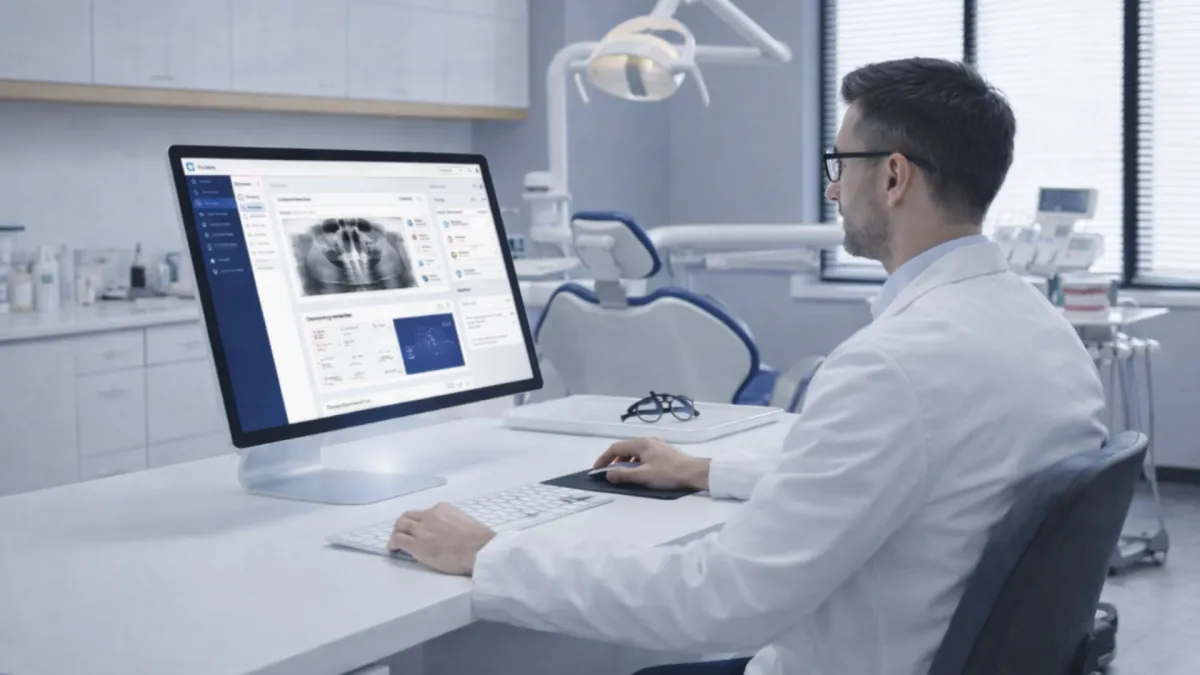
Dental Practice Management Software (DPMS) is essential. It centralizes patient data, schedules, billing, communications, and imaging. For solo practices and smaller offices, it’s a vital tool.
Modern DPMS platforms reduce admin load, improve documentation, and increase efficiency — up to 50% in some practices.¹ Over 80% of U.S. dental practices use some form of DPMS to run daily operations.¹
But for DSOs, DPMS only goes so far.
What DPMS Does Well
Scheduling: Books and manages appointments
Charting/EHR: Centralizes treatment records
Billing & Claims: Submits and tracks payments
Patient Communication: Handles reminders and portals
Imaging Integration: Connects with diagnostic tools
It’s a powerful record-keeping tool. But DPMS was built to log activity, not lead daily execution.
Where DPMS Falls Short for DSOs
No Real-Time Operational Visibility
DPMS tracks outcomes, not activity. Leaders can pull KPIs, but can’t see which tasks are being worked — or if they’re being done at all. As Deloitte notes, without a unified view across locations, performance risks go unnoticed until it's too late.²Inconsistent Execution Between Offices
Each office manages recare, AR, and claims differently — with no system enforcing best practices. This inconsistency causes missed follow-ups, late payments, and uneven results.³⁴No Built-In Task Assignment
Staff are left to interpret reports and figure out what to do next. Most DPMS platforms don’t generate to-do lists or prioritize daily actions. That leads to reliance on sticky notes, spreadsheets, and memory.⁵Disconnected Accountability
DPMS won’t show who followed up on unscheduled treatments or aging claims. There’s no audit trail of task ownership, which forces managers to micromanage — or hope the work gets done.⁵⁶
The Outcome: Awareness Without Action
DPMS surfaces problems but doesn’t solve them. Reports pile up, but without an execution system, they rarely translate into results. As Dentrix Ascend puts it, when each office makes up its own system, things fall through the cracks.⁷
One example: the average practice leaves $1–$1.5M in unscheduled treatment revenue untouched every year — not because it isn’t visible, but because follow-up doesn’t happen.⁶
What DSOs Actually Need: An Execution Layer
DPMS is your database. To run operations at scale, you need a daily system that turns information into action.
Here’s what to look for:
Tools That Drive Revenue, Not Just Reports
If it doesn’t help recover treatment, close AR, or prompt follow-up, it’s just more data. Look for tools that turn visibility into booked appointments and collected dollars.²Daily Task Automation
The right platform auto-generates daily action lists from your PMS data. Some systems can even prioritize tasks using AI.⁸ It ensures critical work gets done, not lost on sticky notes.⁵Role-Based Standard Workflows
Execution breaks down when teams improvise. You want standardized workflows by role — front desk, hygiene, billing — so every office runs the same playbook.⁴⁷Real-Time Progress Tracking
Managers should see what’s completed, what’s overdue, and who’s responsible. No chasing. No assumptions.⁵Leadership Visibility Without Micromanaging
A good system surfaces exceptions — overdue follow-ups, offices falling behind — without burying you in reports. It gives ops leaders control without the grind of constant check-ins.⁹Consistency Across Locations
Scale only works with repeatability. Task systems should automatically assign work and enforce workflows, so every office operates the same way.³⁴Fast Setup and DPMS Integration
It should work with your existing systems, require minimal IT effort, and offer a no-code interface. Otherwise, staff won’t adopt it.
Bottom Line
DPMS is a powerful data engine — but it’s not your operating system. It stores the “what,” but not the “how.” It shows the gaps, but doesn’t close them.
If you’re a growing DSO struggling with dropped follow-ups, inconsistent workflows, or reactive operations, the problem isn’t your DPMS — it’s the missing layer above it.
The future isn’t more dashboards. It’s guided action, daily accountability, and team-wide consistency — built on top of the data you already have.
References
¹ Planet DDS – Top Dental Practice Management Strategies for DSOs
https://www.planetdds.com
² Deloitte via Zentist – 5 Top Challenges DSOs Must Avoid
https://www.zentist.io
³ Adit – Overcoming Multi-Location DSO Hurdles
https://www.adit.com
⁴ Group Dentistry Now – 4 Secrets for Making Your DSO a Success
https://www.groupdentistrynow.com
⁵ VoiceStack – AI Practice Management: Automating Follow-Ups
https://resources.voicestack.com
⁶ Jarvis Analytics – Mine Your Data for Unscheduled Treatment
https://www.jarvisanalytics.com
⁷ Dentrix Ascend – Best Practices for DSOs
https://www.dentrixascend.com
⁸ MaxAssist – AI-Driven Patient Retention Tools
https://www.maxassist.com
⁹ Tensorlinks – Operational Dashboards for DSO Leadership
https://www.tensorlinks.com


Instagram
LinkedIn
X